


Your supplement routine at 25 shouldn't look the same at 45 or 60.
As women move through different stages of life, nutritional needs change. Hormonal shifts during perimenopause and menopause, changes in muscle mass, bone density, metabolism, digestion, and nutrient absorption can all influence what your body needs. In your 40s, you may begin paying closer attention to magnesium, vitamin D, omega-3s, and nutrients that support energy and metabolic health. In your 50s and beyond, maintaining bone density, muscle strength, cardiovascular health, and adequate nutrient levels becomes increasingly important. For example, vitamin D and calcium support bone health, B12 plays an important role in nerve function and red blood cell production, and creatine can be a useful tool for supporting muscle strength and physical performance as we age.
So what do all these supplements actually do?
Magnesium supports hundreds of processes in the body, including muscle and nerve function and sleep.
Omega-3 fatty acids support cardiovascular health.
Vitamin D helps regulate calcium absorption and supports bone health.
Creatine helps muscles produce energy during exercise and may support strength and muscle maintenance.
B12 is essential for neurological function and red blood cell production.
Iron is important for oxygen transport and energy metabolism.
Other supplements, such as zinc, CoQ10, collagen, and electrolytes, may have a role depending on your individual needs. The important distinction is understanding what each supplement does and whether it addresses something your body actually needs.
At Nuance, we incorporate supplements into many of our wellness plans, but we don't believe in taking something simply because it's popular or someone on social media recommends it. We look at the whole picture: your symptoms, health history, nutrition, lifestyle, medications, and lab work. Sometimes we're correcting a deficiency; other times we're providing targeted support for a specific health goal. Iron, for example, isn't something everyone should supplement nor should someone take it long term, and taking too much of certain vitamins and minerals can cause problems. The right supplement, in the right amount, for the right reason makes all the difference.
Your supplement routine should evolve as your body does. Rather than collecting bottles and hoping something works, take the time to understand what you're putting into your body and why. Our goal at Nuance is to help you make informed decisions, identify areas that need support, and build a foundation for healthy aging. Because the goal isn't to take more supplements. It's to give your body what it actually needs.
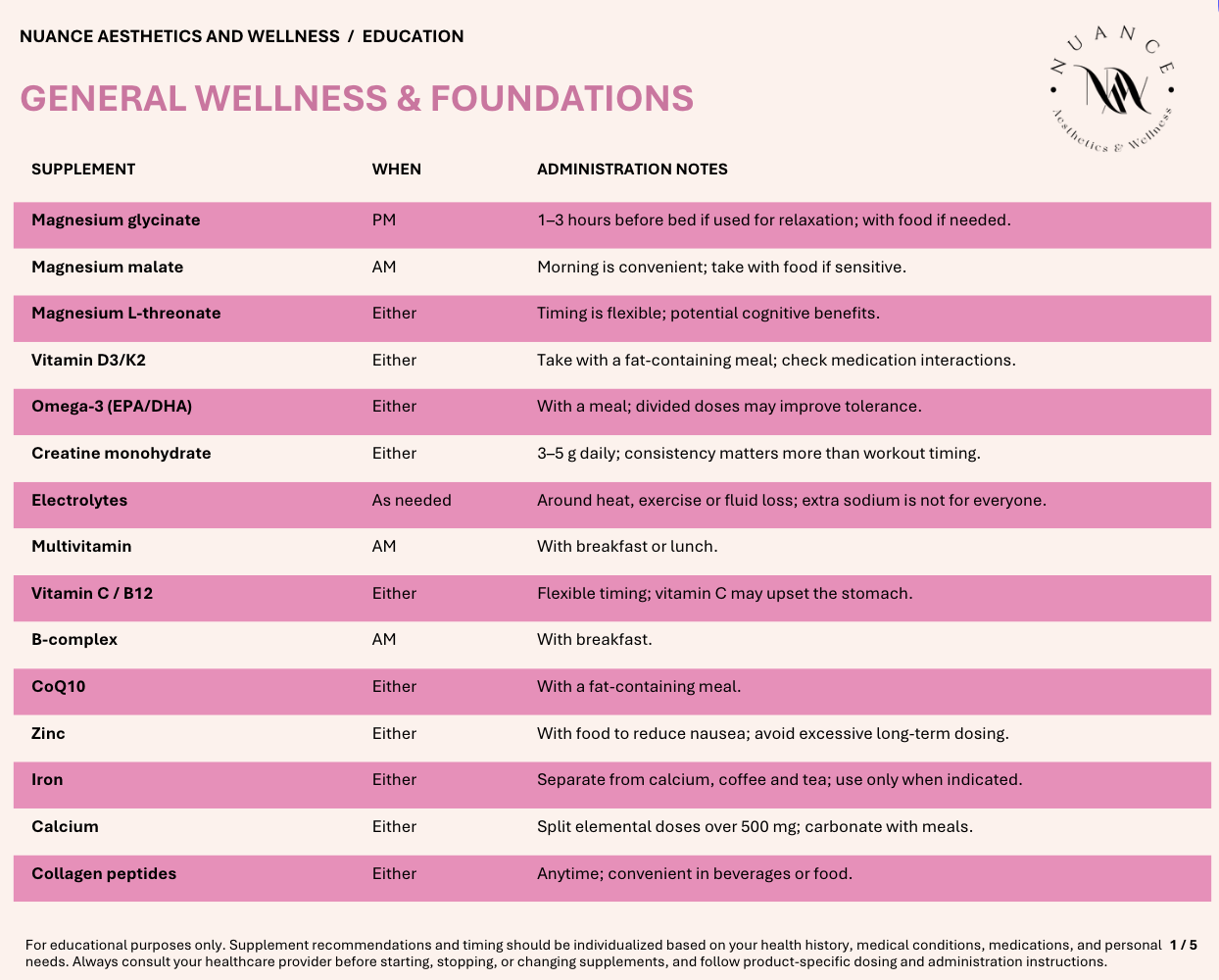
Supplement Timing Card
Want a little help navigating your supplement cabinet? We've put together a general supplement guide outlining common supplements, when they're typically taken for best benefit, and administration tips. Use it as an educational resource, and remember that your individual needs may look different. And as always, reach out with questions!
At Nuance, we take the guesswork out of supplementation by evaluating your symptoms, reviewing your health history, checking labs when appropriate, and creating a personalized plan based on what your body actually needs.
Because the goal isn't to take more supplements. It's to take the right ones, for the right reasons, at the right time.
Ready to stop guessing and start being intentional about your health? Schedule a wellness consultation with us at Nuance Aesthetics & Wellness.